
Progress Isn’t About Who You Train With, It’s About How You Train
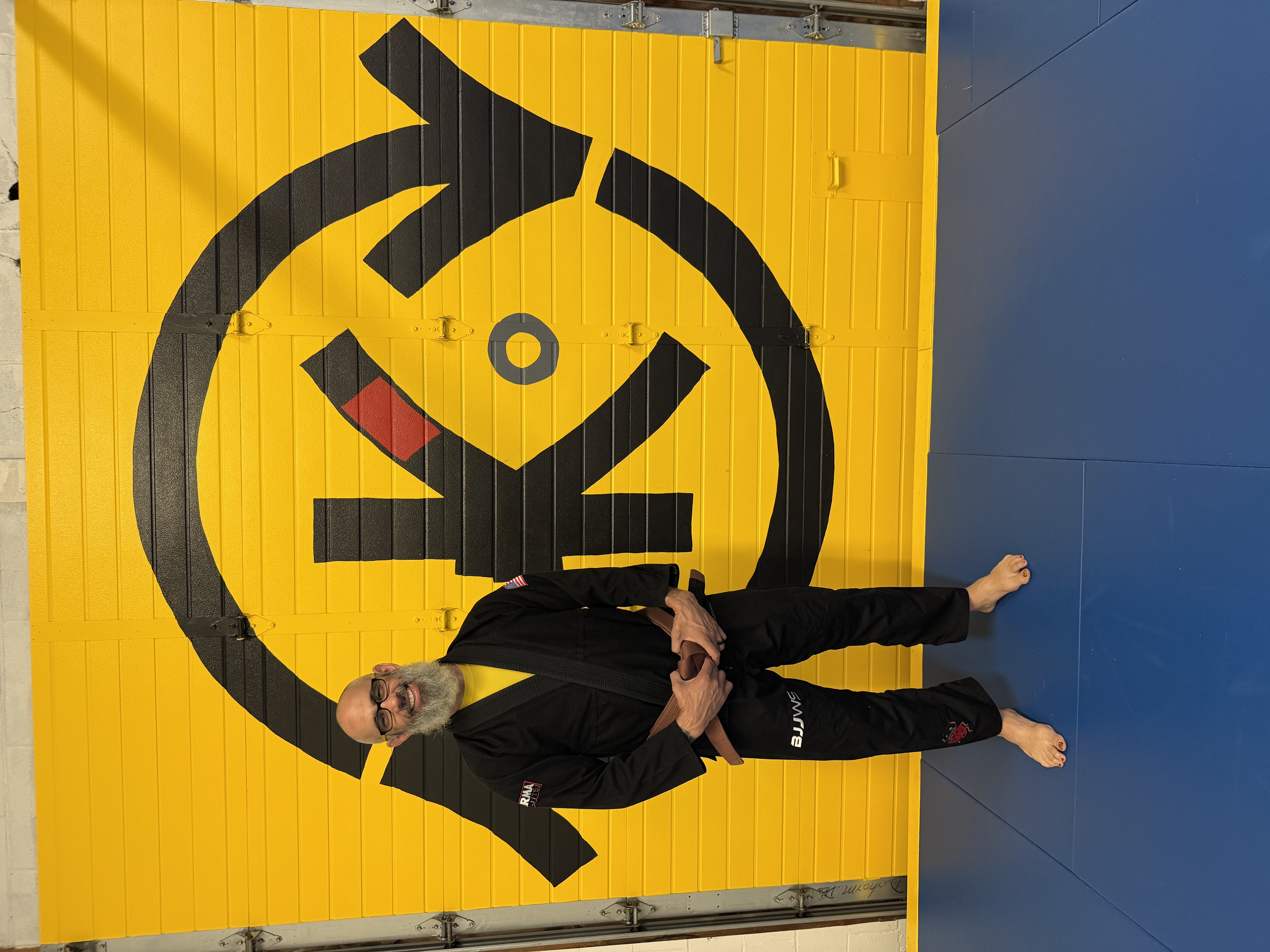
For the last two years, most of my training partners have been white and blue belts.
That’s not something I hide or apologize for, it’s simply the reality of being a coach, building a gym and being a consistent presence on the mats. On Sundays, at open mats, I get my rounds in with black and brown belts. Monday through Saturday? I’m training mostly with white belts and some blues.
And yet, over the past two years, I’ve improved significantly. I would actually say the biggest leap in my jiu jitsu technique has been over the past two years. I won the Ontario Open as a purple belt and have won mulltiple gold medals against brown belts in the brown belt division.
Not accidentally.
Not by chance.
Because my training is intentional.

The Common Misconception
There’s a belief in jiu jitsu that the only way to get better is to constantly train with people who are better than you. Don’t get me wrong, training up is incredibly valuable, but it’s not the whole picture.
If improvement only came from rolling with higher belts, then every black belt who owns a gym would eventually stagnate. If Gordon Ryan is the best, then how does he get better if no one gives him a challenge?
Intentional Training Changes Everything
When I train with white and blue belts, I’m not “just getting rounds in.” I’m training with purpose.
I work specific positions and control points, instead of chasing submissions
I focus on timing, pressure, and balance
I deliberately start in bad positions and allow others to work through their jiu jitsu
I refine fundamentals until they’re automatic
I look for the nuances in the fundamentals to make sure they work
I experiment with transitions I wouldn’t risk in a high-level competition round
Training with lower belts gives me reps, and reps build mastery. I love training with lower belts as I get to help bring them up, which, in turn, gives me better training partners. Remember, I was a white belt once and I wish I knew then what I know now. (hint – I am sharing it with you)
I’m not relying on speed or strength. I’m relying on efficiency, structure, and precision. That kind of training translates directly when I step on the mat with higher belts.
Teaching Is a Force Multiplier
Coaching forces clarity.
When you train and teach at the same time, you’re constantly answering why something works, not just that it works. You see patterns in mistakes. You recognize recurring problems. You sharpen your understanding of fundamentals because you explain them daily.
Every correction I give, every detail I emphasize, reinforces my own game.
Sundays Matter, But They’re Not the Whole Story
Those Sunday sessions with brown and black belts are important. They test my timing. They expose holes. They keep me honest. Most importantly, it allows me to use the techniques and efficiencies I developed training with the lower belts.
Intentional weekday training builds the base.Sunday pressure reveals the results.
Growth Is a Choice
Improvement in jiu jitsu isn’t about who’s across from you, it’s about what you’re trying to accomplish in every round.
You can roll mindlessly with black belts and tap all of the white belts, the result - stagnation.
Or, you can train deliberately with white belts (and all other belts) and level up.
I chose intention.
And two years later, the progress speaks for itself.
So, before you go running off to find “better” training partners ask yourself what can you do to improve your training. And reflect on this, if you are constantly getting beaten down, and never have a chance to work on your game what does anyone learn?



Comments