
Just Keep Showing Up
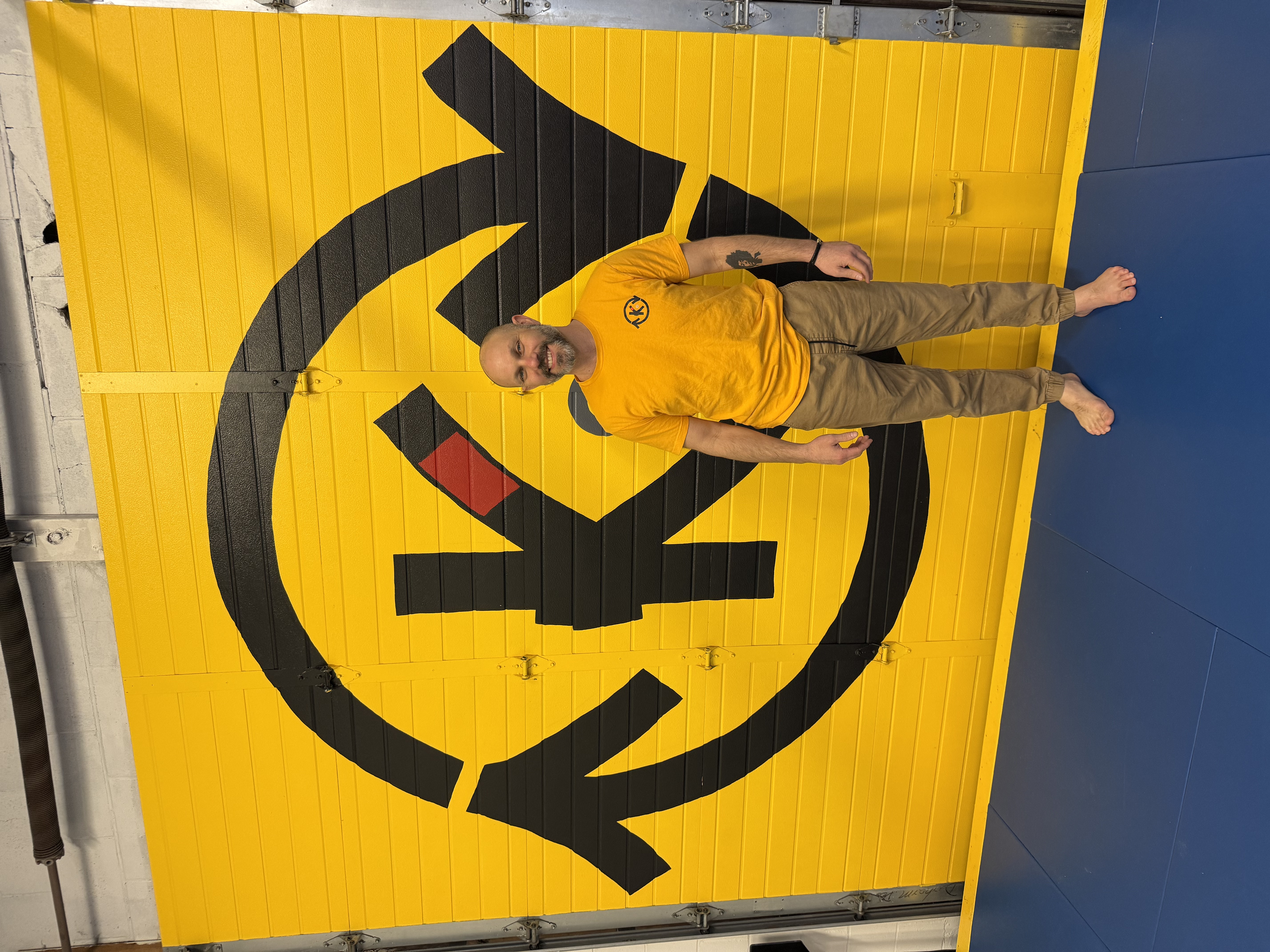
I showed up enough times and finally got the third stripe on my blue belt.
If you've been around the gym, you know that stripe was a long time coming. Part of that is my back pain, which I ignored for far longer than I should have. The other part is something I've been carrying quietly for a long time, and something I've decided it's finally time to share with you. I'd planned to write this when I got my purple belt, but who knows how long that could be, so this stripe feels like the right time. I'll get there. But first, I want to talk about the two best pieces of advice I've ever been given. They were about jiujitsu, but it turns out they were about everything else too.

Leave your ego at the door
You hear it in lots of gyms. For a long time I took it to mean "be humble," and that's part of it. But the bigger lesson, for me, was learning to accept the things that are out of my control.
There will always be someone bigger, stronger, faster, younger, more athletic, more experienced. I could go on. The point is that you're going to lose, and you can't take it personally.
It took me seven years of training to really understand this: for a long stretch of your jiujitsu life, you may lose most of the time. Where that stretch ends is different for everyone. I have three stripes on my blue belt, and I've made peace with the fact that I'm probably not going to "beat" a 6'3", 220-pound, 32-year-old, no-stripe white belt athletic dude. The same goes for any teammates who are younger, faster, more athletic, and have a few weeks of training under them.
But I only lose if I decide that's what happened. Once you check your ego, you realize every class, and every roll, has something to teach you.
What's kept me grounded is that I stopped trying to "win." Instead, I set a goal for each round. Rolling with a purple belt or above, the goal might be to make it through the whole round without getting tapped. If I do get caught, I replay where it went wrong, or I ask my partner. With that monster white belt, my goal is to find the moment where, if this were a real fight, I could get back to my feet and get away. If it doesn't work, I ask myself where it could have, and why it didn't.
Checking your ego works the other way, too. With teammates I know I can usually beat, I don't go hunting for the tap. When I get to a point where I could submit them, I back off and try to be a good training partner instead. I'll help them work their way into a better position, or, if I'm the one in the dominant spot, give them tips on how to defend it. Don't get me wrong: if I get the chance to submit someone at my level or above, I take it. But tapping out someone I'm supposed to beat doesn't teach either of us much. Helping them get better does.
That's what I try to teach the kids in my classes. It's easier said than done, but I keep saying it anyway. There's nothing wrong with wanting to win. But jiujitsu will humble you fast, and if winning is your only measure, the losing can wear you down until you want to quit.
I know that feeling well.
Just keep showing up
A few years ago, I was on the edge of quitting. I couldn't do the things I'd been able to do when I started in June 2019, and I hadn't told anyone at the gym why. That's when I met Alan Titone.
It wasn't the most pleasant introduction. He was a two-stripe purple belt; I was a two-stripe white belt. We rolled, and he was on top of me almost immediately, grinding his shaved head and bristly beard from my jaw to my temple. I reacted. He armbarred me. We slapped hands, bumped fists, and went again. He got to side control, pinned my arm under my body, and choked me out. This went on for five minutes.
When the round mercifully ended, I did what I'd been taught and asked him for feedback. I was braced for the usual: "you're really strong," or "you move well, but protect your neck."
Instead, he gave me the advice I still cling to today:
Just keep showing up.
It's so simple, and so true. It made me realize that nobody had any expectations of me except me. The only pressure was the pressure I put on myself. And the only way I was ever going to get better was to keep training. So I didn't quit. I kept showing up, and I accepted that some days I'd improve more than others, and that even the smallest improvement is still an improvement.
As you already know, once he and Rachael decided to open up Karma Jiujitsu, I happily went with them.

What I haven't told you
Here's the part I've been working up to.
I have multiple sclerosis.
I was diagnosed in 2020, about a year after I started jiujitsu, and rediagnosed with primary progressive MS in 2022. When I do something, I do it to the max, even when it comes to health conditions.
That's what I was carrying when I nearly quit. It's a fight I'm never going to win. These days I'm working with about 65% of my strength and capability. I've lost most of the mobility in my left leg and foot, and it has started creeping into my left hand and arm.
Everything I just wrote about, leaving your ego at the door, accepting what's out of your control, not measuring yourself by wins and losses, isn't just how I approach a roll. It's how I live with this. MS is out of my control, so I don't let it get into my head. I let go of needing to win on the mats, and I've let go of letting MS define my days.
And "just keep showing up" has taken on a new meaning. I lose a little more strength and mobility every day, so my reason for doing jiujitsu has changed. Now it's about staying active. Jiujitsu keeps me moving in ways that walking, yoga, stretching and lifting weights never could. It's all of those rolled into one, plus a little je ne sais quoi. There's just something about it that other exercise doesn't give me, no matter how hard I push myself.
That also means every day I miss is a day I'll never get back. It's the really bad days that keep me off the mats. I've had to check my ego about that, too. Some days I simply can't train, and I've come to accept that managing those days is part of the deal. On the days I can, I show up.
That's why this year stung. My back started hurting in January, and I kept telling myself it would get better. It didn't. It lingered for days, then weeks, then months, and I barely trained. It took a member asking me what my doctor had said about it for me to realize I'd never asked one. I was just hoping it would go away by resting and stretching. When I finally got X-rays, they showed disc deterioration at L4, L5 and S1. I should have known better and gotten checked sooner. Now that I've started treatment, I'm back on the mats.
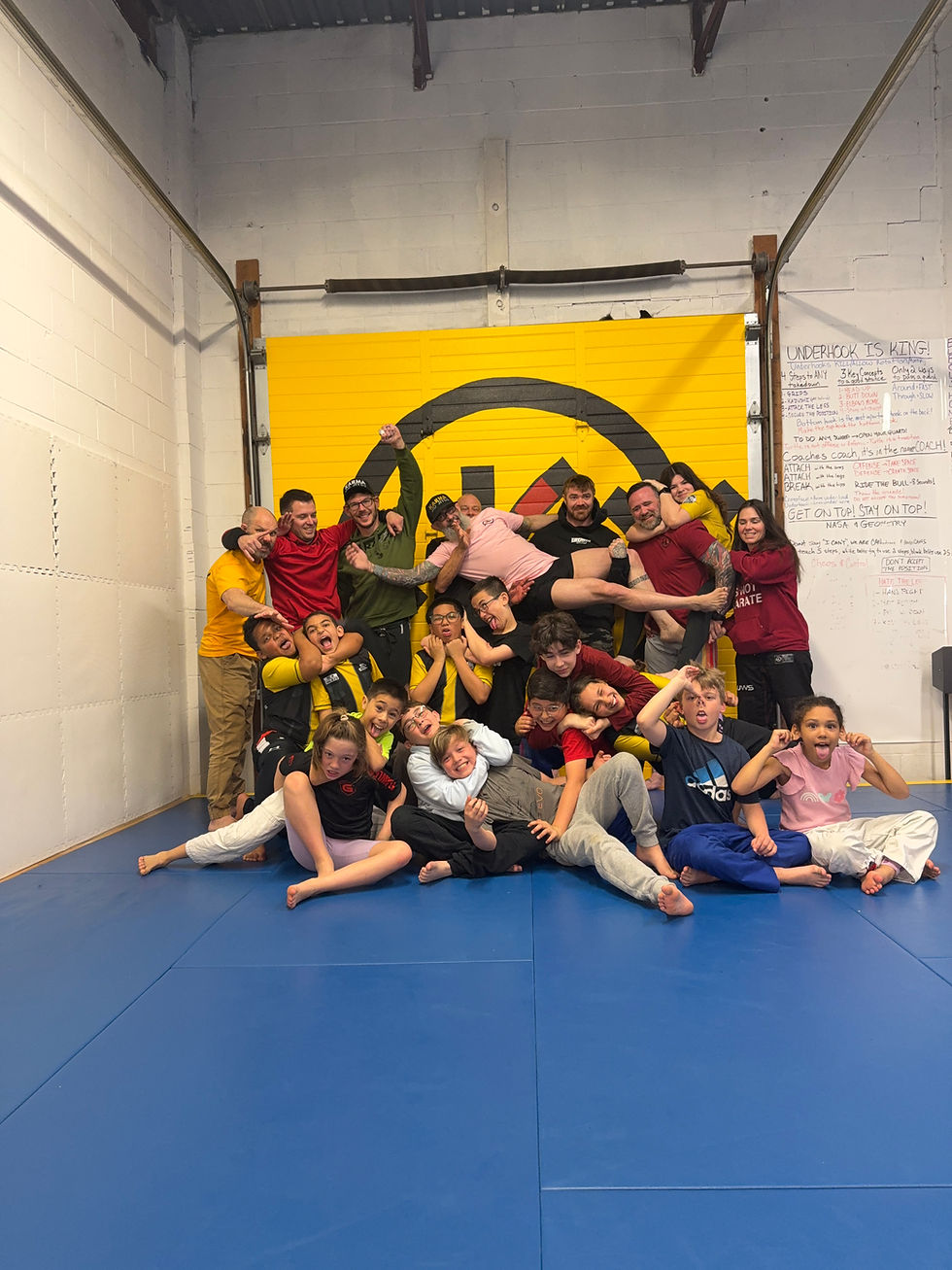
But jiujitsu is more than exercise for me. It's my community. It took me most of my life to find my people, and I found them here. At Karma we say jiujitsu is not about jiujitsu, and it's one of the truest things I've ever heard. It's walking into the living room and getting smiles and thanks from the parents. It's the high fives from all the kids you trust me to help grow on this martial arts journey.
You are family to me, and I shouldn't be hiding this from you. You deserve to know, especially those of you I train with, whether we're rolling or I'm instructing, bleary-eyed and stiff, at 7:00 a.m.

It's not you, it's me
To my training partners: if I ever "duck" a roll with you, please don't take it personally. Some days my body won't let me roll with the kind of jiujitsu you play, and I have to manage my training. It's never about you.
One ask
Please, whatever you do, don't feel sorry for me. Don't pity me.
I hope instead that you see me as a small point of inspiration, whether on the mats or in some other part of your life. No matter how hard something gets:
Just keep showing up.



Comments